What Is Swing Trading?
Posted on
Start Investing
Posted at
Introduction
Markets rarely move in straight lines. They surge, pull back, consolidate, then surge again, creating natural “swings” that active traders have learned to harness. Swing trading is the strategy designed exactly for these rhythmic price movements.
Unlike day traders who must close every position before the market bell or long-term investors who hold for months or years, swing traders aim to capture gains over a few days to several weeks. This balanced approach sits perfectly in the middle, offering meaningful profit potential without the extreme time demands or overnight-blind risks of other styles.
In this comprehensive guide, you will discover exactly what swing trading is, how it works in today’s markets, the essential technical tools that power it, proven strategies that work in 2026, honest pros and cons, real-world examples, and the psychological discipline required to succeed. Whether you are a busy professional with a full-time job or an investor tired of watching every tick, swing trading could become your most practical path to consistent returns. By the end, you will have a clear roadmap to start or refine your own swing trading plan.
Understanding Swing Trading: Bridging Day Trading and Long-Term Investing
At its core, swing trading exploits the natural ebb and flow of prices within a larger trend. Stocks, ETFs, and even some futures rarely go straight up or straight down. Instead, they pause, retrace, and then resume the dominant direction, driven by shifts in trader sentiment, news, earnings, or economic data.
Swing traders identify these temporary counter-moves (pullbacks in uptrends or bounces in downtrends) and enter positions once the main trend reasserts itself. Typical holding periods range from two to ten trading days, sometimes stretching to three or four weeks for stronger swings.
This style differs sharply from its closest cousins. Day trading requires constant screen time and forces you to exit by 4 p.m. ET, often triggering the Pattern Day Trader (PDT) rule if your account is under $25,000. Position trading, on the other hand, relies more on fundamentals and can keep capital tied up for months while ignoring short-term opportunities.
Swing trading gives you the best of both worlds: bigger average wins than day trading and far less time commitment than either style, plus the freedom to hold overnight without PDT restrictions. Many US traders with day jobs love this flexibility. They analyze charts in the evening, place orders before the open, and check positions once or twice a day.
Key characteristics include heavy reliance on technical analysis rather than company fundamentals, clear risk-reward ratios (most successful swing traders target at least 1:3, risking $1 to make $3 or more), and strict use of stop-loss orders placed below recent support or above resistance.
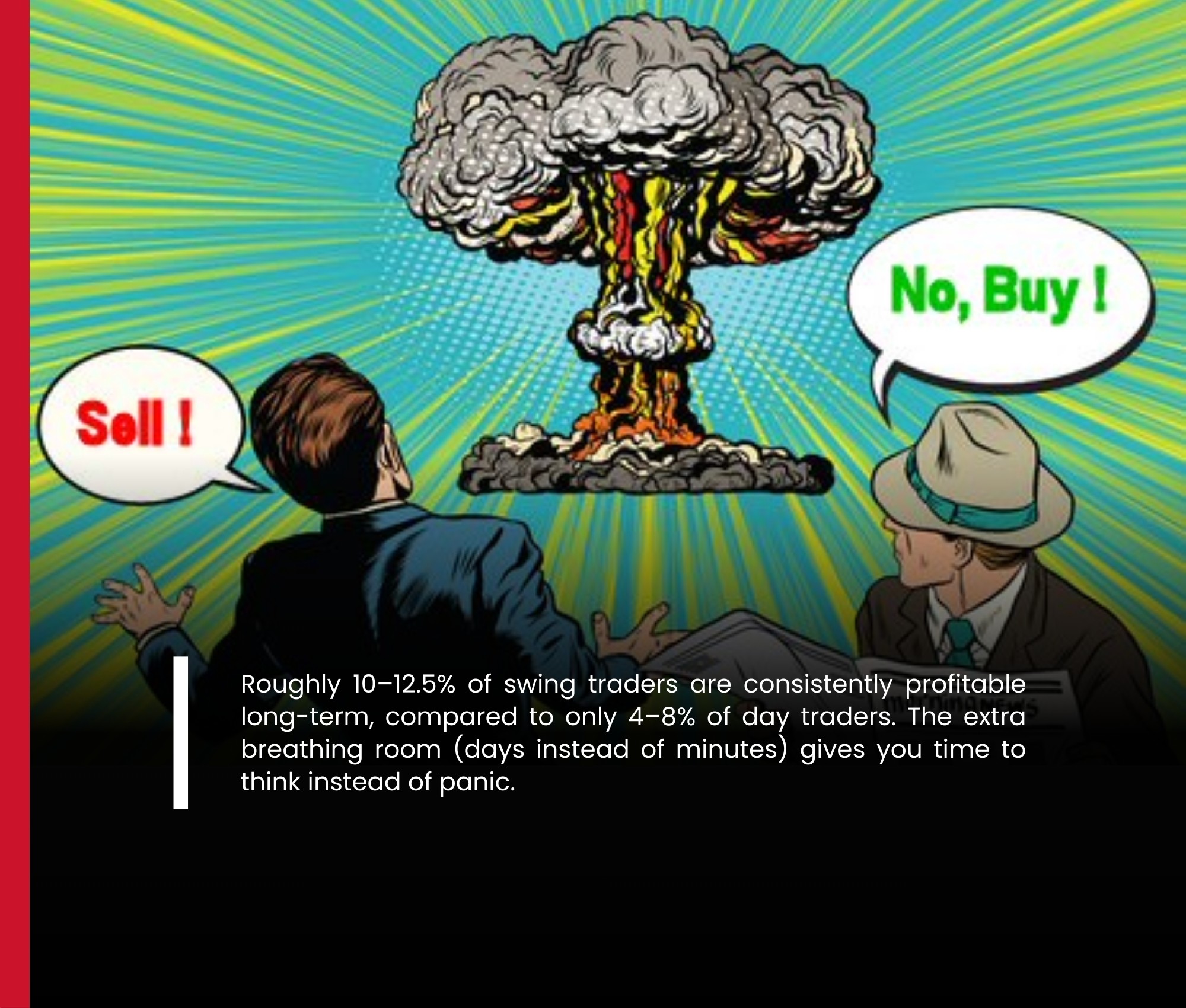
The intellectual beauty of swing trading lies in its alignment with market psychology. Human fear and greed create the very swings traders exploit. When prices dip on temporary bad news but the long-term uptrend remains intact, swing traders step in calmly while others panic. This disciplined contrarian edge is what separates profitable swing traders from the crowd.
The Art and Science of Swing Trading Strategies
Successful swing trading blends art (reading price action and market context) with science (objective indicators and rules). Here are the core tools every trader should master.
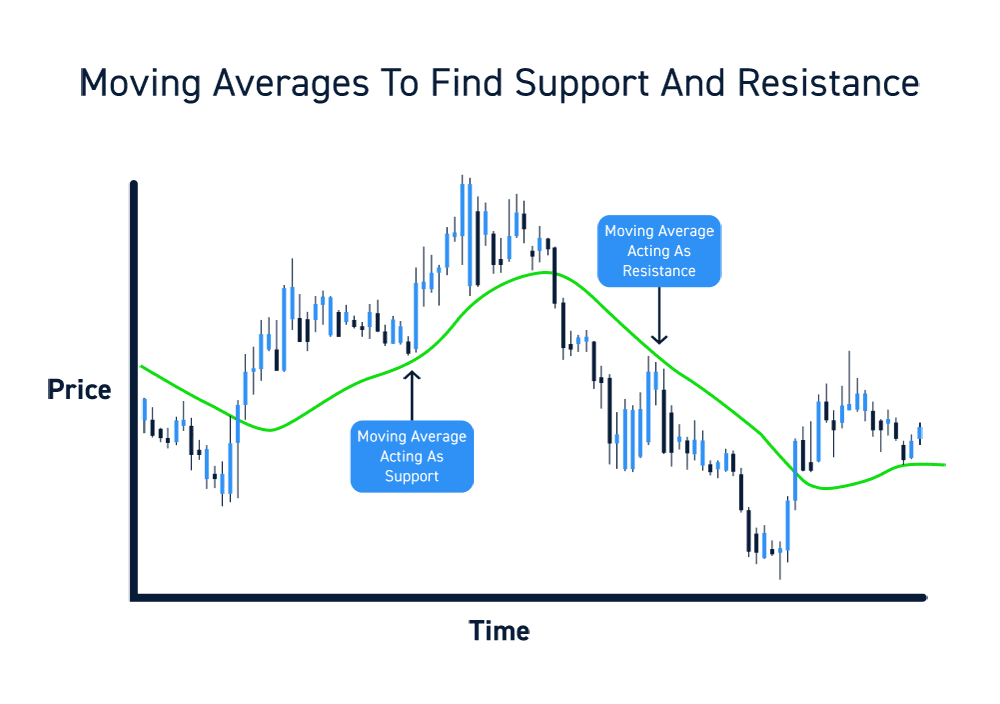
Moving Averages act as dynamic support and resistance. The 8-day and 20-day simple or exponential moving averages are favorites. In an uptrend, prices often pull back to the 20-day average and bounce. Entering long near that level with confirmation offers a high-probability setup.
Relative Strength Index (RSI) measures momentum on a 0-100 scale. Readings below 30 signal oversold conditions ripe for a bounce; above 70 indicate overbought levels where pullbacks may begin. Divergence (price makes new high but RSI does not) often warns of an impending reversal.
MACD (Moving Average Convergence Divergence) shines at spotting momentum shifts. Look for line crossovers or histogram expansion in the direction of the trend. Positive divergence (price lower low, MACD higher low) is especially powerful for long entries.
Fibonacci Retracement levels (23.6%, 38.2%, 50%, 61.8%) help predict how far a pullback might travel before the main trend resumes. When a 61.8% retracement lines up with a moving average and an oversold RSI, the probability of a strong bounce rises dramatically.
Chart patterns add visual confirmation: bullish flags and pennants signal continuation after brief consolidation; cup-and-handle formations often precede powerful breakouts; double bottoms mark reliable reversal zones.
Popular swing trading strategies include:
Trend Pullback – Buy dips in strong uptrends near key moving averages.
Breakout from Consolidation – Enter when price breaks above resistance on rising volume after a tight range.
Support Bounce – Buy at major horizontal support levels with multiple indicator confirmations.
Fibonacci Confluence – Trade only when two or more tools align at the same price zone.
Always wait for confirmation rather than anticipating. A common rookie mistake is jumping in too early; patient swing traders let the market prove the reversal has started.
Real-World Application of Swing Trading
Swing trading rewards discipline far more than raw intelligence. The biggest edge comes from emotional control. Markets test traders with sudden gaps, fakeouts, and FOMO spikes. Successful swing traders follow their predefined plan even when fear or greed screams otherwise.
Pros of swing trading
Requires only 30-60 minutes per day, perfect for working professionals.
Captures larger percentage moves than typical day trades.
Avoids PDT rule for accounts under $25,000.
Lower transaction costs due to fewer trades.
Can be fully backtested and systematized.
Cons and risks
Overnight and weekend gap risk (earnings or news can move prices against you while markets are closed).
Requires ironclad stop-loss discipline.
Opportunity cost of capital tied up for days or weeks.
Emotional challenge of watching unrealized profits evaporate during normal pullbacks.
Smart risk management mitigates these issues. Never risk more than 1-2% of your total account on any single trade. Always calculate position size based on the distance from entry to stop-loss. Maintain a minimum 1:3 risk-reward ratio. Use trailing stops (for example, the 20-day moving average) once a trade moves 2:1 in your favor.
Real-world example Consider a hypothetical technology stock trading in a clear uptrend. After a strong earnings beat, the price pulls back to the 20-day moving average at $142, where RSI hits 32 (oversold) and a bullish MACD crossover appears. You enter long at $143.50 with a stop-loss at $138.50 (risking $5 per share). Your first target is the previous swing high at $158 (potential $14.50 gain, nearly 3:1 reward).
The stock rallies over the next eight trading days, hitting $157. You trail your stop to $149 and exit at $155.50 for a 8.4% gain in under two weeks. Meanwhile, the broader market barely moved. This single well-executed swing trade demonstrates the power of confluence and patience.
Key tips for long-term success
Trade only the highest-liquidity stocks and ETFs on major US exchanges (NASDAQ and NYSE).
Keep a detailed trade journal with screenshots and lessons.
Backtest every new setup on at least 50 historical examples.
Start with a small account or paper trade until your win rate and risk-reward prove consistent.
Review performance monthly and adjust rules, never the market.
Conclusion
Swing trading offers an intellectually stimulating and practically accessible way to participate in the stock market. By understanding market swings, mastering technical tools like moving averages, RSI, and MACD, applying proven strategies, and maintaining strict risk management and emotional discipline, you can generate consistent returns whether the broader market is trending up, down, or sideways.
You now know what swing trading is, how it compares to other styles, which strategies deliver results in 2026, and the mindset required to succeed. The next step is action.
Join the StockProfitClub community today for live swing trade alerts, weekly watchlists, and member-only strategy sessions.
The market will keep swinging. The only question is whether you will be positioned to profit when it does. Start building your swing trading edge now. Your future portfolio will thank you.