Dollar Tumbles to a Four-Year Low in 2026
Posted on
Start Investing
Posted at
Introduction
Imagine logging into your brokerage account on a crisp January morning in 2026, only to see your US stock holdings swaying wildly due to unexpected currency fluctuations. As an American investor navigating the NYSE and NASDAQ, you've likely felt the sting of market volatility fueled by inflation pressures, Federal Reserve policies, and global trade tensions. The recent news of the dollar tumbles to a four-year low in 2026 has sent shockwaves through Wall Street, affecting everything from your 401(k) to IRA investments in tech giants like Apple or industrial powerhouses like Caterpillar.
In this article, we'll dive deep into this pivotal economic event, offering you actionable insights to turn potential risks into opportunities. Whether you're a beginner exploring dollar tumbles to four-year low in 2026 analysis for stock picks or a seasoned trader seeking strategies for financial independence, you'll discover proven ways to achieve high returns while minimizing risks in the US stock market. Drawing from real-time market data and expert analysis, we'll explore how this dollar decline influences investment strategies, stock trading, and your path to financial freedom. Stay tuned to empower your portfolio amid these 2026 trends.
Understanding the Dollar's Tumble to a Four-Year Low
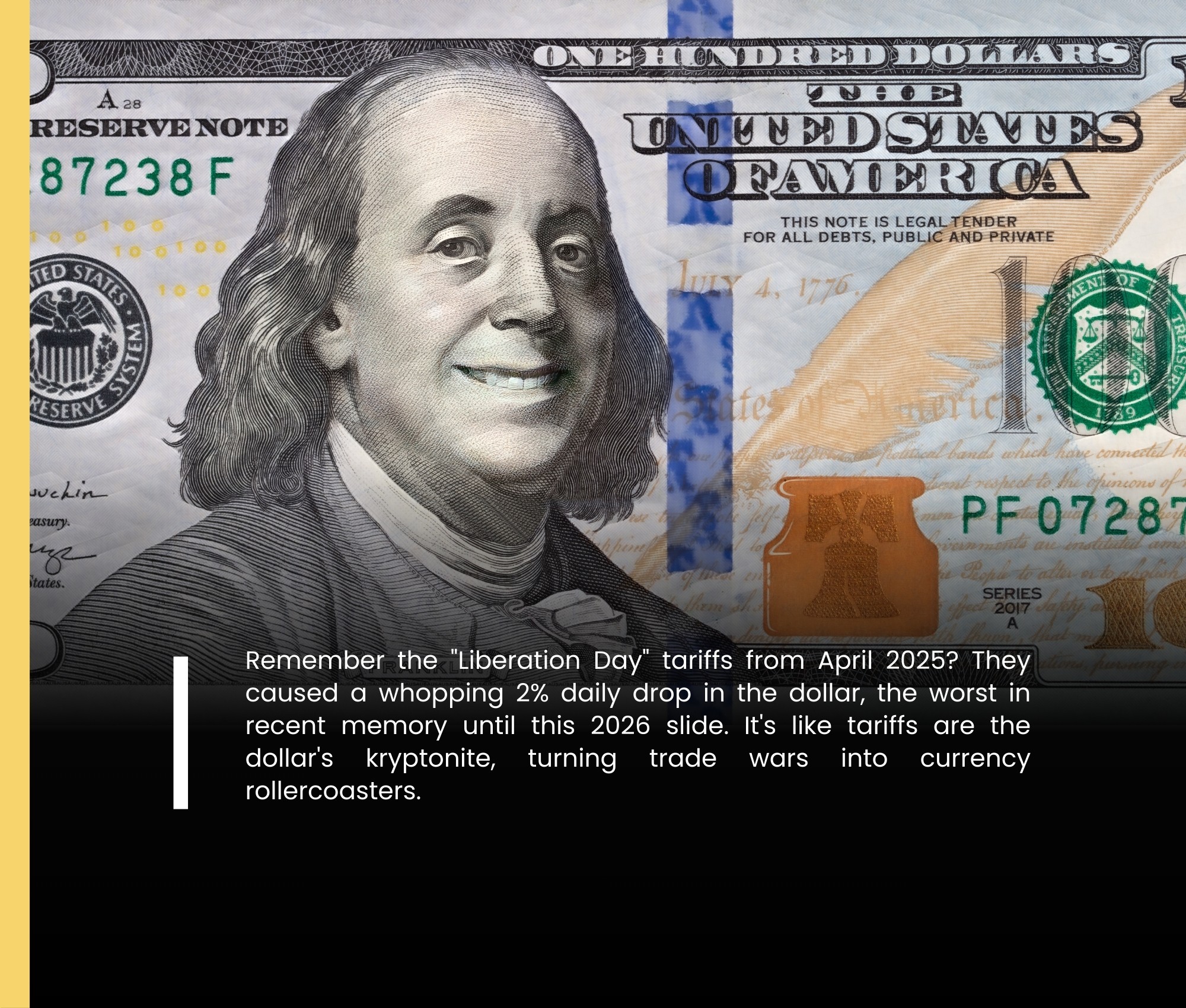
To grasp the full impact, let's break down the fundamentals. The U.S. dollar, often measured by the ICE U.S. Dollar Index (DXY)—which tracks the greenback against a basket of major currencies like the euro and yen—plunged to 95.86 on January 27, 2026. This marked its lowest point since February 17, 2022, representing a sharp 1.2% daily drop, the worst since April 2025. This decline isn't just a blip; it's part of a broader trend where the dollar has weakened over the past year since President Donald Trump's return to the White House.
Key Reasons Behind the Decline
Several economic and political factors converged to drive this tumble. First, the U.S. national debt has ballooned beyond $38 trillion, fueled by persistent budget deficits, tax cuts, and emergency spending programs. This fiscal strain has made investors wary, as higher debt levels can lead to inflation and erode confidence in the dollar. The administration's push for lower interest rates aims to reduce borrowing costs, but it clashes with elevated longer-term rates, creating market uncertainty.
Trade policies have also played a starring role. Frequent tariff threats, including the infamous "Liberation Day" tariffs from April 2025 that caused a 2% DXY drop, have strained international relations and boosted import costs for American businesses. Domestically, events like the turmoil in Minnesota have spilled over into financial markets, adding to the volatility. Globally, rising Japanese bond yields and other nations' cautious fiscal approaches—avoiding rate cuts to strengthen their positions—have further pressured the dollar.
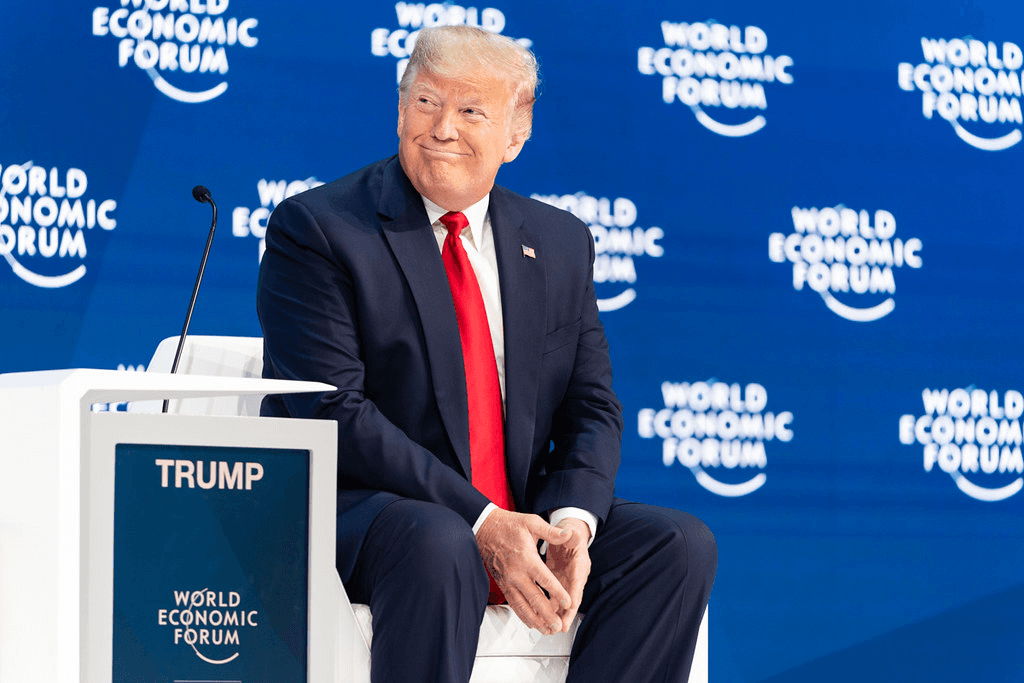
President Trump's commentary has added a layer of intrigue. During a speech in Iowa aimed at rallying support for Republicans ahead of the November 2026 midterms, he dismissed concerns about the decline, stating, “No, I think it’s great. I mean, the value of the dollar. Look at the business we’re doing. No, the dollar’s doing great.” He has previously highlighted how a weaker dollar can lower export prices, making U.S. goods more competitive abroad. When pressed on whether he wants an even weaker dollar, Trump replied, “No, I want it to be, just seek its own level, which is the fair thing to do.”
Experts like Max Wasserman, co-founder and senior portfolio manager at Miramar Capital, offer a contrasting view: “We’re talking about an administration that wants a lot lower rates with [an] increasing deficit.” He warns that the U.S. isn't demonstrating fiscal responsibility, which could exacerbate the dollar's woes compared to more disciplined global economies.
This event echoes historical patterns, such as the dollar's weakest yearly start on record, tying into ongoing themes of deficits and trade wars. For US investors, understanding these dynamics is crucial—especially when referencing SEC-regulated indicators like the S&P 500 or Dow Jones, which dipped amid the news (DJIA at 49,003.41, down 0.83%).
Key Benefits and Strategies for US Investors
While this might seem alarming, it presents significant benefits for savvy US investors focused on stock trading and investment strategies. A weaker dollar can boost American exporters by making their products cheaper overseas, potentially increasing revenues and stock prices for companies on the NYSE and NASDAQ.
Benefits of a Weaker Dollar
Enhanced Export Competitiveness: Firms like Boeing (NYSE: BA) or Caterpillar (NYSE: CAT) stand to gain as lower dollar values reduce the price of U.S. machinery and aircraft for foreign buyers, driving up demand and earnings.
Commodity Price Surges: Assets like gold, which climbed to $5,165.00 amid the tumble, act as hedges against currency weakness. This benefits mining stocks or ETFs tracking commodities.
Inflation and Rate Dynamics: Though deficits fuel inflation, a weaker dollar can stimulate economic growth, indirectly supporting sectors like technology (e.g., Nasdaq at 23,817.10, up 0.91%).
For retirement accounts like 401(k)s or IRAs, this environment encourages diversification into international funds, where a soft dollar amplifies returns from overseas investments.
Step-by-Step Strategies
Here's a practical guide to capitalize on this trend:
Monitor Key Indicators: Track the DXY daily via platforms like Yahoo Finance (Yahoo Finance DXY Tracker). Look for dips below 96 as buy signals for export stocks.
Diversify Your Portfolio: Allocate 20-30% to export-oriented ETFs like the Vanguard FTSE Developed Markets ETF (NYSE: VEA), which benefits from a weak dollar.
Invest in Hedging Assets: Add gold or commodity funds, such as the SPDR Gold Shares (NYSE: GLD), to protect against volatility.
Leverage Stock Picks: Focus on US multinationals. For example, during the April 2025 tariff episode, stocks in agriculture and manufacturing rebounded strongly post-dip.
Use Options for Protection: Employ put options on broad indices like the S&P 500 to guard against further declines tied to political events.
Real-world examples abound: Amid the 2026 tumble, crude oil edged up to $62.54, benefiting energy stocks like ExxonMobil (NYSE: XOM).
Common Mistakes, Expert Tips, and Best Practices
Navigating the dollar tumbles to a four-year low in 2026 requires avoiding pitfalls that could derail your investment strategies. Many US investors fall into traps amplified by emotional reactions to news like Trump's optimistic claims versus stark market realities.
Common Mistakes to Avoid
Panic Selling During Dips: Reacting to a 1.2% DXY drop by dumping stocks ignores historical recoveries, such as post-2025 tariffs.
Ignoring Global Impacts: Overlooking how Japanese yields or international deficits affect the dollar can lead to undiversified portfolios.
Over-Reliance on Political Rhetoric: Betting solely on Trump's view that the dollar is “doing great” without data can expose you to risks from unchecked deficits exceeding $38 trillion.
Neglecting SEC Regulations: Failing to comply with disclosure rules in volatile trades can invite penalties.
Expert Tips and Best Practices
Drawing from StockProfitClub's mission, here are tips for informed trading:
Stay Informed with Reliable Sources: Use Investopedia for jargon explanations (Investopedia on Dollar Index). Bold key metrics like VIX (at 16.35, up 1.24%) to gauge fear.
Implement Risk Management: Set stop-loss orders at 5-10% below entry points for stocks affected by currency swings.
Diversify Across Assets: Balance US equities with bonds or cryptocurrencies (Bitcoin at $89,356.29). As Wasserman advises, focus on fiscal responsibility in your strategy to counter national trends.
Learn from Courses: Enroll in our course: everything-you-need-to-become-a-profitable-trader-in-2026
Regular Portfolio Reviews: Quarterly assess exposure to export sectors, adjusting for Fed policies or midterm election outcomes.
By following these, you minimize risks and maximize returns, aligning with timeless 2026 trends in stock trading.
Conclusion
This decrease in value underscores the interplay of deficits, tariffs, and political narratives in shaping US markets. From the DXY's plunge to 95.86 amid Trump's claims of a “great” dollar, to benefits for exporters and strategies like ETF diversification, this event offers lessons in resilience. We've explored fundamentals, benefits, and pitfalls, emphasizing practical advice for American investors eyeing financial independence.
Now, take action: Join the StockProfitClub community today to access exclusive insights, sign up for our courses or contact us for personalized advice. Empower your journey toward high returns and risk-minimized trading—your financial freedom awaits in 2026 and beyond.